
The summer of 1816 arrived with an unsettling chill, a season that would be remembered not for its warmth and vibrancy but for its eerie stillness and unseasonable frost. Across the northern hemisphere, farmers awoke to fields blanketed in snow, their crops stunted and their hopes dashed. In the small towns of New England, children bundled in woolen coats played in the remnants of winter, while adults gathered around hearths, their faces drawn with worry. The year would come to be known as the Year Without a Summer, a historical anomaly that would ripple through time, leaving behind a legacy of hardship and reflection.
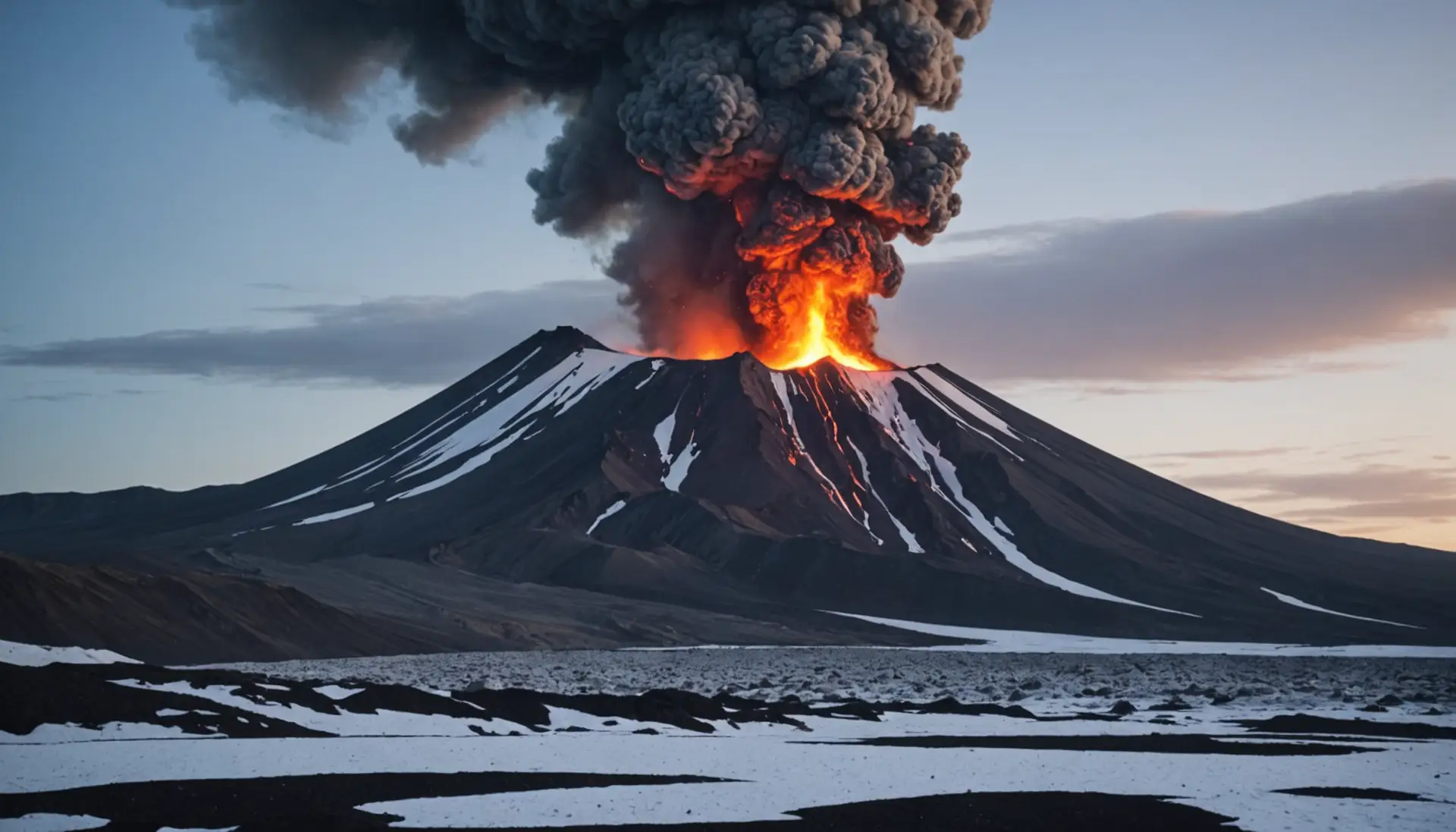
To understand this peculiar year, one must first look back to the cataclysmic eruption of Mount Tambora in Indonesia, which occurred in April 1815. This event was not merely a local disaster; it was a geological upheaval that sent plumes of ash and sulfur dioxide high into the atmosphere, altering weather patterns across the globe. The eruption was so powerful that it is estimated to have released more energy than the combined force of all nuclear weapons ever detonated. The air became thick with particles that blocked sunlight, casting a pall over the earth. As the ash settled, it created a veil that would lead to a cascade of climatic anomalies.
In the months following Tambora’s eruption, the world experienced what has been termed a volcanic winter. The summer of 1816 was marked by unseasonably cold temperatures, torrential rains, and relentless storms. In Europe, the skies were perpetually gray, and the sun seemed to hide behind a curtain of ash. Crops failed across the continent, leading to widespread famine and unrest. In America, the situation mirrored that of Europe; farmers watched helplessly as their fields turned to mud and their livestock perished from the cold. The year became a crucible for human endurance, testing the limits of resilience in the face of nature’s wrath.
The impact of this climatic upheaval was felt far beyond the immediate regions affected by the eruption. In New England, where summer should have brought warmth and abundance, frost persisted into June. The air was heavy with moisture, and the ground remained sodden and unyielding. Farmers who had planted their crops early found themselves staring at barren fields, their hopes for a bountiful harvest dashed by an unrelenting chill. The once-familiar rhythms of agricultural life were disrupted; families faced starvation as food supplies dwindled. The specter of hunger loomed large over communities that had once thrived on the fruits of their labor.
As the summer dragged on, reports of unusual weather patterns began to emerge from various corners of the globe. In Switzerland, snow fell in July, while in parts of France, hailstorms ravaged what little remained of crops. The air was thick with an unsettling tension as people grappled with the inexplicable changes around them. The year became a tapestry woven with threads of despair and uncertainty; it was a time when nature seemed to conspire against humanity. The social fabric began to fray as communities struggled to adapt to their new reality.
The consequences of this weather anomaly extended beyond mere agricultural failure; they rippled through economies and social structures. In towns where trade had once flourished, merchants found themselves unable to sell goods that had become scarce. Prices soared as food became a precious commodity, leading to unrest and protests among those who could no longer afford basic sustenance. The specter of famine loomed large over Europe and North America alike, igniting fears that would linger long after the cold had receded.
In this climate of uncertainty, creativity found a way to flourish amidst despair. Artists and writers responded to the Year Without a Summer with works that reflected both their personal struggles and the broader human experience. Mary Shelley famously conceived her novel “Frankenstein” during this tumultuous summer while staying at Lord Byron’s villa near Lake Geneva. The eerie atmosphere and relentless rain provided fertile ground for her imagination, giving birth to a tale that would resonate through generations. Other artists captured the stark beauty of a landscape transformed by nature’s fury, creating works that spoke to both loss and resilience.
As time passed, scientific understanding began to catch up with the events of 1816. Researchers sought to unravel the mysteries behind the volcanic winter and its far-reaching effects on climate. They studied ice cores from glaciers and analyzed sediment layers in lakes, piecing together a narrative that revealed how interconnected our planet’s systems truly are. The eruption of Mount Tambora served as a stark reminder of nature’s power and unpredictability; it underscored the importance of understanding geological phenomena in order to prepare for future disasters.
The lessons learned from the Year Without a Summer continue to resonate today as climate scientists grapple with contemporary challenges posed by global warming and environmental degradation. The events of 1816 serve as a cautionary tale about humanity’s vulnerability in the face of natural disasters. As weather patterns become increasingly erratic due to climate change, understanding past anomalies can inform strategies for resilience and adaptation in an uncertain future.
In recent years, there has been a renewed interest in commemorating the Year Without a Summer as both a historical event and a reminder of humanity’s relationship with nature. Museums and educational institutions have begun to explore this chapter in history through exhibitions and lectures that highlight its significance. By remembering this global event, society can reflect on its past while fostering awareness about current environmental issues.
The Year Without a Summer stands as an eerie testament to nature’s capacity for disruption and transformation. It serves as both a historical anomaly and a poignant reminder of humanity’s fragility in the face of forces beyond its control. As we navigate an increasingly complex world marked by climate change and environmental challenges, the lessons learned from 1816 remain relevant—urging us to listen closely to the whispers of history as we forge our path forward into an uncertain future.